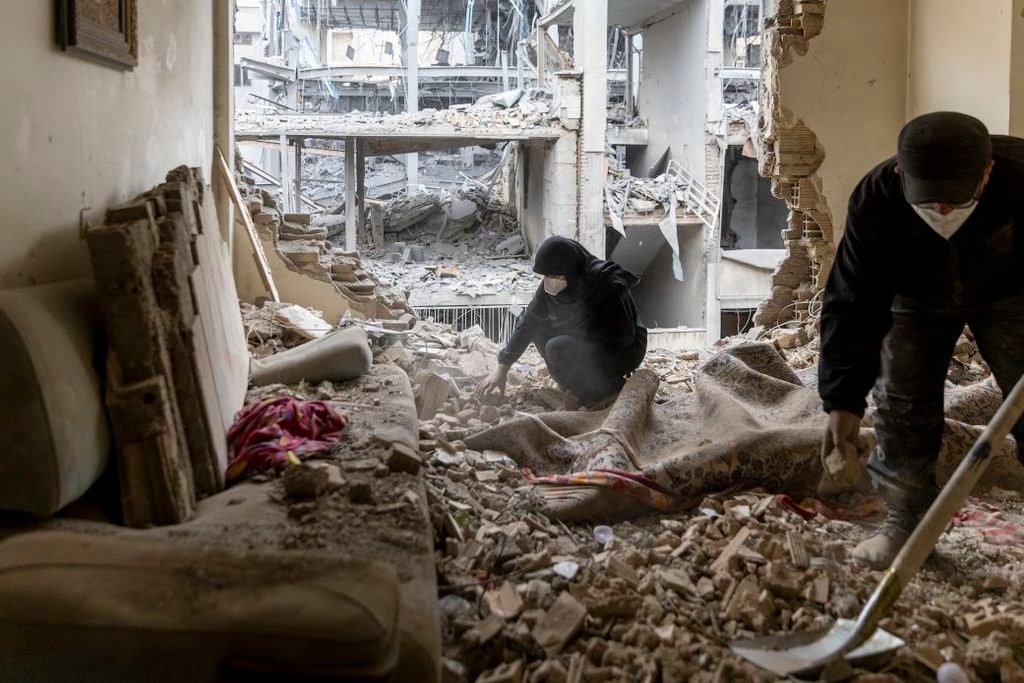
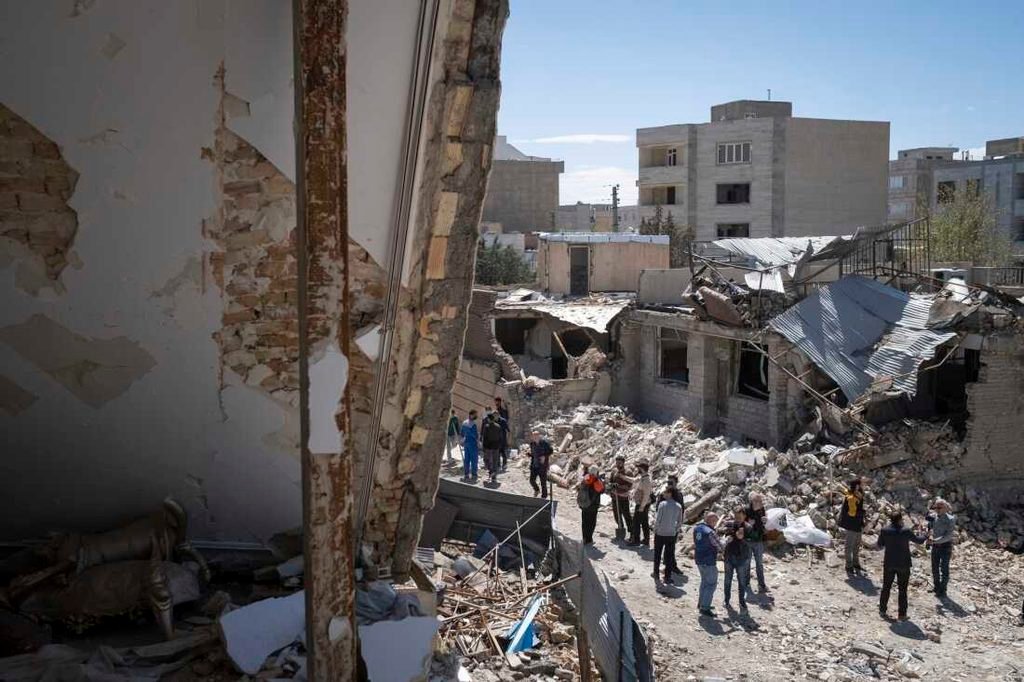
If you are looking for world news today, here is the short version: diplomacy and disaster are dominating the global headlines on Tuesday, 29 September 2026. Iran and the United States are trading proposals through Qatari mediators in New York. Washington and Beijing have announced a new round of tariff cuts alongside an AI dialogue. Hurricane Polo has slammed into Mexico’s Baja California peninsula, and Russia has struck Kyiv again.
Below is a clear, easy-to-read breakdown of the latest world news, why each story matters, and what to watch next.
Today’s World Trending News at a Glance
- Iran–US war diplomacy: Indirect talks continue in New York, with a US reply expected from Washington.
- US-China relations: Tariff cuts on about $30 billion of goods each way, a trade council, and a new AI incident channel.
- Ukraine war: Russian drones and missiles hit Kyiv, killing at least seven people.
- Hurricane Polo: Landfall in Baja California Sur, with flood alerts reaching the US Southwest.
- UK security scare: Five men arrested near RAF Fairford were released on bail.
- Taiwan: Defence minister says existing US arms sales are unchanged, but a huge package remains stalled.
- Myanmar: Airstrikes in Rakhine state killed at least 50 people.
- Thailand: Monsoon floods swamp Bangkok.
1. Iran–US Talks: Mediators Try to Break the War Stalemate
The most closely watched story in today’s world news is the ongoing effort to end the war involving Iran and the United States, which is now close to the seven-month mark.
On Monday, Iranian Foreign Minister Abbas Araghchi met Qatari mediators in New York to discuss the latest proposals. President Donald Trump confirmed that American officials also spoke with mediators, though he shared few details. Araghchi described the contacts as indirect and said Tehran is waiting for an official response from Washington, which he hoped would arrive on Tuesday. Iranian officials also said his stay in New York had not been extended and that he would return to Tehran on schedule.
The central sticking point is a difference in priorities. Iran wants the talks to focus on the Strait of Hormuz and the US naval blockade. The Trump administration wants concrete Iranian concessions on the nuclear programme. Last week, on the sidelines of the UN General Assembly, Araghchi outlined a seven-day plan under which Iran would reopen the Strait of Hormuz if Washington met certain conditions. Trump rejected that offer.
There was also a twist on Monday. US officials told reporters that Trump was prepared to offer sanctions relief and release frozen Iranian funds in return for real nuclear steps. Trump then said publicly that such reports were untrue. Meanwhile, Trump repeated that the United States will win the war “very soon” and said fuel prices will fall once it ends.
Why it matters: The Strait of Hormuz is one of the world’s most important oil routes. Any breakthrough, or any collapse in talks, can quickly move oil prices, petrol prices and stock markets worldwide. Pakistan and Qatar are both acting as mediators, which makes this story especially relevant for readers across South Asia and the Gulf.
2. US-China Agree Tariff Cuts and an AI Incident Channel
Another major headline in global news this week comes from Washington, where Chinese President Xi Jinping wrapped up a three-day visit with Donald Trump.
According to the White House, the two sides reached agreement on more favourable tariff treatment for roughly $30 billion of non-sensitive goods in each direction. On the American side, this covers exports such as agricultural products, wood and cosmetics. On the Chinese side, it includes goods such as small appliances, toys and decorations. Some outlets have reported the combined figure as about $60 billion.
Both countries also agreed to set up a trade council and to extend an existing trade truce, giving negotiators more time to work on a bigger deal. Reports differ slightly on the exact new expiry date, so check official statements before quoting a specific date.
Beyond trade, the summit produced something unusual: an agreement to hold a dialogue on the risks and benefits of artificial intelligence, with the next round due in November, and to create a communication channel for AI-related incidents. This comes as industry leaders continue to warn about the pace of AI development.
A note of caution: Some analysts point out that the tariff figure is a recommendation from the US-China Board of Trade, not a signed final tariff schedule. Headlines can make it sound more finished than it is.
Why it matters: The United States and China are the world’s two largest economies. Lower tariffs can ease costs for shoppers and exporters, while an AI incident channel shows that both governments now treat advanced AI as a shared security issue.
3. Ukraine War: Deadly Strikes on Kyiv
Russia carried out fresh attacks on the Ukrainian capital on Monday, using ballistic missiles and dozens of jet-powered drones, according to Ukraine’s air force. At least seven people were killed and more than 80 were injured. Rescue crews were seen putting out a fire at the National Academy of Sciences building in Kyiv, which was damaged in the strikes.
Russia’s Defence Ministry said its forces hit data-processing centres in Kyiv that it claims are used by the Ukrainian military, which is increasingly relying on artificial intelligence on the battlefield. Ukraine has not accepted that description of the targets.
Why it matters: The attacks show that the war is now as much about technology and infrastructure as it is about frontlines. Continued bombardment of the capital also raises pressure on Western governments to decide how much more air-defence support to provide.
4. Hurricane Polo Hits Mexico and Threatens the US Southwest
Weather is the other big driver of today’s world trending news. Hurricane Polo made landfall early Tuesday on the Baja California peninsula in Mexico, striking just south of the small fishing village of Las Barrancas in Baja California Sur as a Category 2 hurricane. Sustained winds were around 150 to 175 km/h, with gusts of up to about 200 km/h and very high waves.
Before landfall, Polo had already caused serious damage in the western state of Jalisco, where at least two people died and three were reported missing. At its peak, the storm reached Category 5 strength over the Pacific. Residents in Puerto San Carlos were evacuated, and supermarkets were packed over the weekend as families stocked up.
Polo is expected to cross the Gulf of California and make a second landfall on mainland Mexico, still as a hurricane, before weakening inland. Flood watches have been issued across several US states, including Arizona, New Mexico, Colorado, Texas and Utah.
Forecasters link this unusually active season to a strong El Niño. Nine hurricanes have formed in the Pacific this year, three of them reaching Category 5, while the Atlantic has not produced a single hurricane.
Why it matters: Flash floods can be deadly far from the coast, so people in the Southwest US should follow local weather alerts closely.
5. UK Terror Scare Near RAF Fairford
In Britain, five men in their 20s were arrested early on Sunday near RAF Fairford, an airbase used by US forces, on suspicion of explosives and terrorism offences. They were released on bail on Monday, with police saying strict conditions apply.
The base has been used by the United States for limited bombing missions against Iran. Tehran had previously warned that any base used to attack Iran could be considered a legitimate target, but Iran has rejected any link to this case. Investigators have not publicly tied the suspects to any foreign state.
Why it matters: The case shows how the Middle East conflict is raising security concerns in Europe, even far from the battlefield.
6. Taiwan Says US Arms Sales Remain Unchanged
Taiwan’s Defence Minister Wellington Koo said on Tuesday that existing US arms sales to Taiwan are unchanged and that talks with Washington on individual deals are ongoing. However, a record package worth about $14 billion remains stalled, and concerns are growing that President Trump could pause future sales. China has repeatedly pushed Washington to stop arming the island.
Why it matters: Any change in US arms policy could shift the security balance in the Taiwan Strait, one of the most sensitive flashpoints in Asia.
7. Myanmar: Airstrikes Kill at Least 50 in Rakhine
An Arakan Army spokesperson said the death toll from Myanmar military airstrikes in Rakhine state has risen to at least 50, with 58 others injured, after rescuers found more bodies. The figures were confirmed by an aid worker.
Separately, Malaysia began repatriating 1,476 Myanmar nationals under a voluntary programme, part of a group of 5,000 due to return in stages. The UN refugee agency and rights groups have warned that conditions in Myanmar are still unsafe.
8. Bangkok Floods After Extreme Monsoon Rain
Heavy monsoon rain has flooded parts of Bangkok, with more than 300 mm falling in many areas over three days, roughly half of London’s annual rainfall. Thousands of people have been forced to leave their homes, and one jet skier was prosecuted after riding through the floodwater.
How Today’s World News Affects Ordinary People
Even if these events feel far away, several of them reach everyday life:
- Fuel and energy: Progress or failure in the Iran talks affects oil supply through Hormuz, and that shows up in petrol and transport costs.
- Prices and trade: US-China tariff changes influence the cost of consumer goods, farm exports and manufacturing.
- Travel and safety: Storms in Mexico and floods in Thailand disrupt flights, tourism and supply chains.
- Technology: The new AI incident channel signals that governments are starting to build rules for advanced AI.
What to Watch Next
- Washington’s reply to Iran’s proposal and whether the Qatari-Pakistani mediation produces a real breakthrough.
- Hurricane Polo’s second landfall and flood impact in the US Southwest.
- US-China follow-up: final tariff details and the November AI dialogue.
- Ukraine: whether attacks on Kyiv intensify and how allies respond.
- Taiwan: any decision on the stalled US arms package.
Frequently Asked Questions (FAQs)
What are the top world news stories today?
The biggest stories on 29 September 2026 are the Iran–US mediation talks, the US-China tariff and AI agreement, Hurricane Polo in Mexico, and the Russian strikes on Kyiv.
Is there a ceasefire between the US and Iran?
No confirmed ceasefire yet. Mediators from Qatar and Pakistan are still passing proposals, and Washington’s response was expected soon.
What did the US and China agree on?
They agreed on favourable tariff treatment for about $30 billion of non-sensitive goods each way, a trade council, an extended trade truce, and a dialogue and incident channel on AI.
Where did Hurricane Polo make landfall?
It struck Baja California Sur, Mexico, near Las Barrancas, as a Category 2 hurricane early on Tuesday.
How often is this page updated?
We update our world news coverage as major stories develop. Bookmark this page and check back for the latest.
Conclusion
From the Strait of Hormuz to the streets of Kyiv and the coast of Baja California, today’s world news shows how closely linked politics, security, the economy and the climate have become. We will keep tracking these stories and update this page as events unfold. Stay with us for more latest world news, breaking headlines and trending updates.
Word count: approx. 1,900
Sources (editor reference, publish mat karo):
- Axios (Iran talks, 22 and 28 Sept), Tribune India / ANI (Trump and mediators)
- The National, CNN, The Business Standard (US-China summit)
- WORLD Radio, Morning Star, GoLocalProv (Kyiv, RAF Fairford, Bangkok)
- CBS News, Euronews, CNBC, NBC (Hurricane Polo)
- Just Security Early Edition (Taiwan, Myanmar, Malaysia)